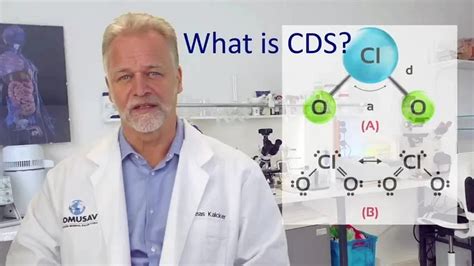
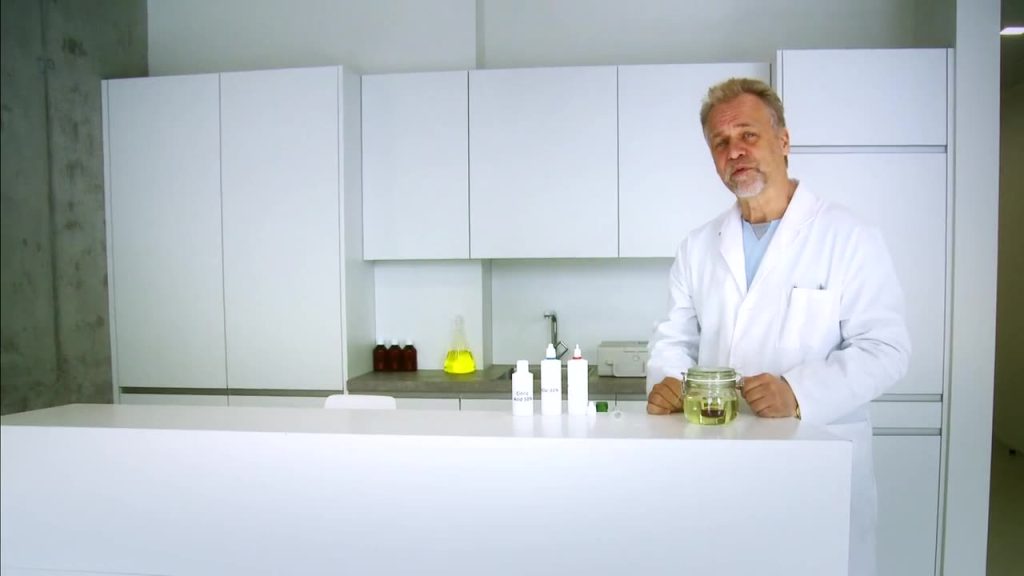
Andreas Kalcker: From Sick Cows to a Global Movement

Andreas Kalcker, a German-born biophysics researcher who later lived in Spain and Switzerland, first encountered chlorine dioxide more than 14 years ago. His journey began not in a lab, but in his own body. At the time, Kalcker was struggling with arthritis when a friend mentioned MMS (Master Mineral Solution) to him. Curious but cautious, he ordered some online.
- The First Test: When the bottle arrived, he hesitated. Instead of taking it himself, he decided to test it on his dog, who had been noticeably low on energy. After just a short time on MMS, the once-lethargic dog began racing around the house with newfound vitality. Watching this transformation, Kalcker thought, “Hmmm, maybe I should try it too.”
- The Personal Discovery: He began following one of the MMS protocols while, coincidentally, packing and moving boxes. His wife warned him, “Be careful with your arthritis, you’re going to be in a lot of pain afterwards.” But the pain never came. In fact, he felt unexpectedly well. That moment sparked his deeper curiosity, and, as Kalcker himself has said, the rest is history.
The Evolution to CDS
He went on to develop CDS (Chlorine Dioxide Solution), which is simply trapping the gas into distilled water that is being generated when activating it. He was interested in a cleaner version of MMS to inject into sick cows. And as Andreas hoped for, it worked.
Unlike MMS (a mix of sodium chlorite and acid), CDS is pure chlorine dioxide gas dissolved in neutral-pH water. This process removes unreacted sodium chlorite, significantly reducing stomach upset and other side effects.
Though his company was later disbanded amid controversy, Kalcker and his community released CDS dosing guidelines that shifted from drop-counting to milliliter-based precision. For example, 1 mL of CDS is roughly equivalent to 1 drop of activated MMS taken orally. In 2023, he released updated protocols based on over a decade of real-world experience—highlighting CDS’s neutral pH, lack of chlorite, and ease of dosing using a pipette.
The Kalcker Contribution
Dr. Andreas Kalcker—biophysicist and a leading voice in the chlorine dioxide world—took Jim Humble’s raw discovery and refined it into something cleaner. By capturing activated chlorine dioxide gas in distilled water, he developed CDS (Chlorine Dioxide Solution), which he described as offering many of the same benefits as MMS, but with fewer side effects and greater consistency.
With exact milliliter dosing, a neutral pH, and broad applications ranging from oral to intravenous use, CDS became the next evolution in the world of alternative healing.
CDS Trials in Cattle
Long before CDS became a household name in natural healing circles, Kalcker began testing it on animals—specifically cows. A friend of his who owned a large herd (reportedly around 800 cattle) was struggling with animal infections, and Kalcker sought a practical solution. What he discovered changed everything.
- The Ruminant Challenge: Unlike humans, cows are ruminants, meaning they have a multi-chambered stomach system that breaks down food through fermentation. This digestive process reacts poorly with unactivated sodium chlorite, making traditional MMS problematic for cattle. Kalcker saw this challenge and began developing a version of chlorine dioxide that was pre-activated and pH-neutral—leading directly to the creation of CDS.
- Targeted Delivery: Instead of relying on oral administration, which proved ineffective or even harmful in cows, Kalcker opted for intramuscular injections of CDS dissolved in saline. These injections were administered directly into localized sites of infection, offering a more targeted and tolerable delivery method.
- Real-World Results: One account from a Welsh farmer described how Kalcker’s approach appeared to bring rapid recovery to sick calves suffering from multiple viral infections. The method was highly specific: injections weren’t given systemically, but rather aimed at individual disease sites, such as joints or muscles, where inflammation or infection was present.
This experimentation wasn’t just veterinary science—it was a turning point. It showed that CDS could work not only across species, but across contexts—whether in farm fields or clinics. It also highlighted a core value behind Kalcker’s work: precision. Unlike MMS, which often relied on guesswork with drop counts and variable activation, CDS offered consistency, stability, and the flexibility to be adapted to different physiologies—including those of large mammals.
In short, what began as a workaround for cow digestion turned into a revolutionary delivery system—one that continues to impact thousands of people and animals worldwide.
Claims, Protocols & Patents
Kalcker holds several patents for chlorine dioxide applications, including:
- Treatment of hypoxia (notably in COVID-19 cases)
- Reduction of inflammation and infections
- Relief for insect and animal bites
- General antiseptic use